Satellite
Hi-hat bleed, cancelled
Hihat + Cymbal sends. Snare, Snare Bottom, Kick and Tom receive and take the hi-hat out of their own mic. The drum itself is never touched.
Needs a close hi-hat mic. Listen lets you hear exactly what is removed.
Coming soon · Seven channel plugins · one per drum · measured in Tampere, Finland
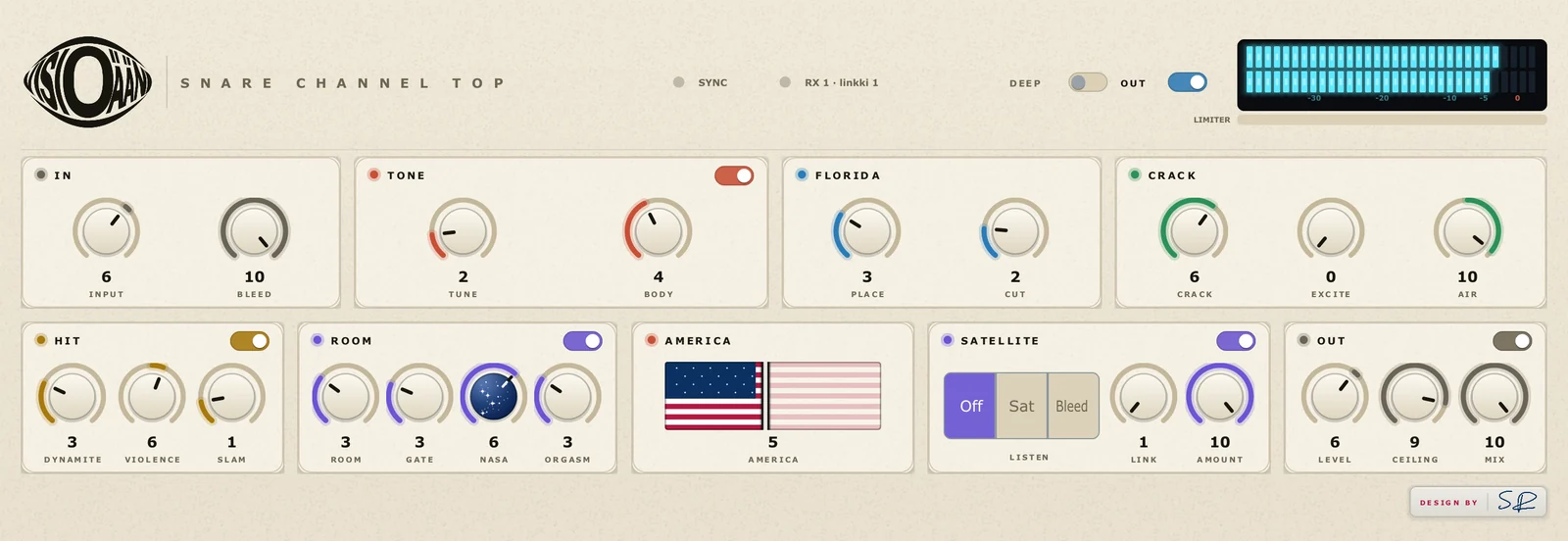
Texas thump on the kick, Florida snap on the snare and a hint of Nasa in the room. Seven drum channel plugins that turn raw multitracks into big, modern American rock and metal drums.
Texas cut
Texas-size cut from the muddy area. The mud leaves, the thump stays, and the level moves 0.04 dB across the whole range.
Florida shaper
The cardboard goes, the drum stays, and the level match keeps your volume where it was.
America slider
The last stage in every plugin, on a track shaped like the flag. Weight against crack in one move, reverb included.
Each one is a complete channel for its drum: the EQ moves, the dynamics, the room and the generated parts that drum needs, in one window.
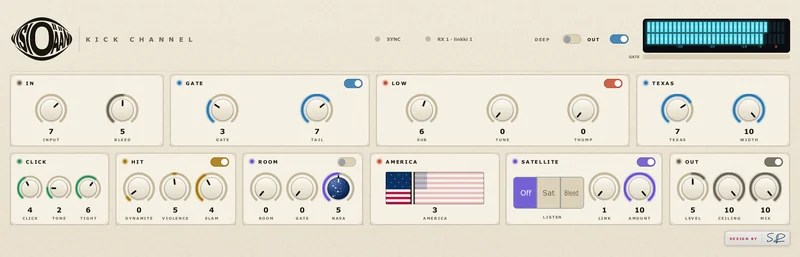
Texas-size cut from the muddy area, a beater click built from your own kick, sub that hits and a room that leaves the low end dry.
Texas cut · real click Details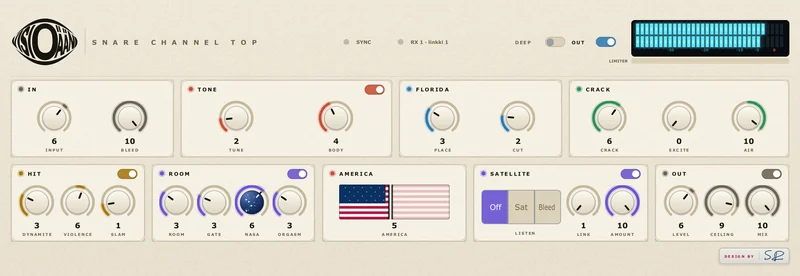
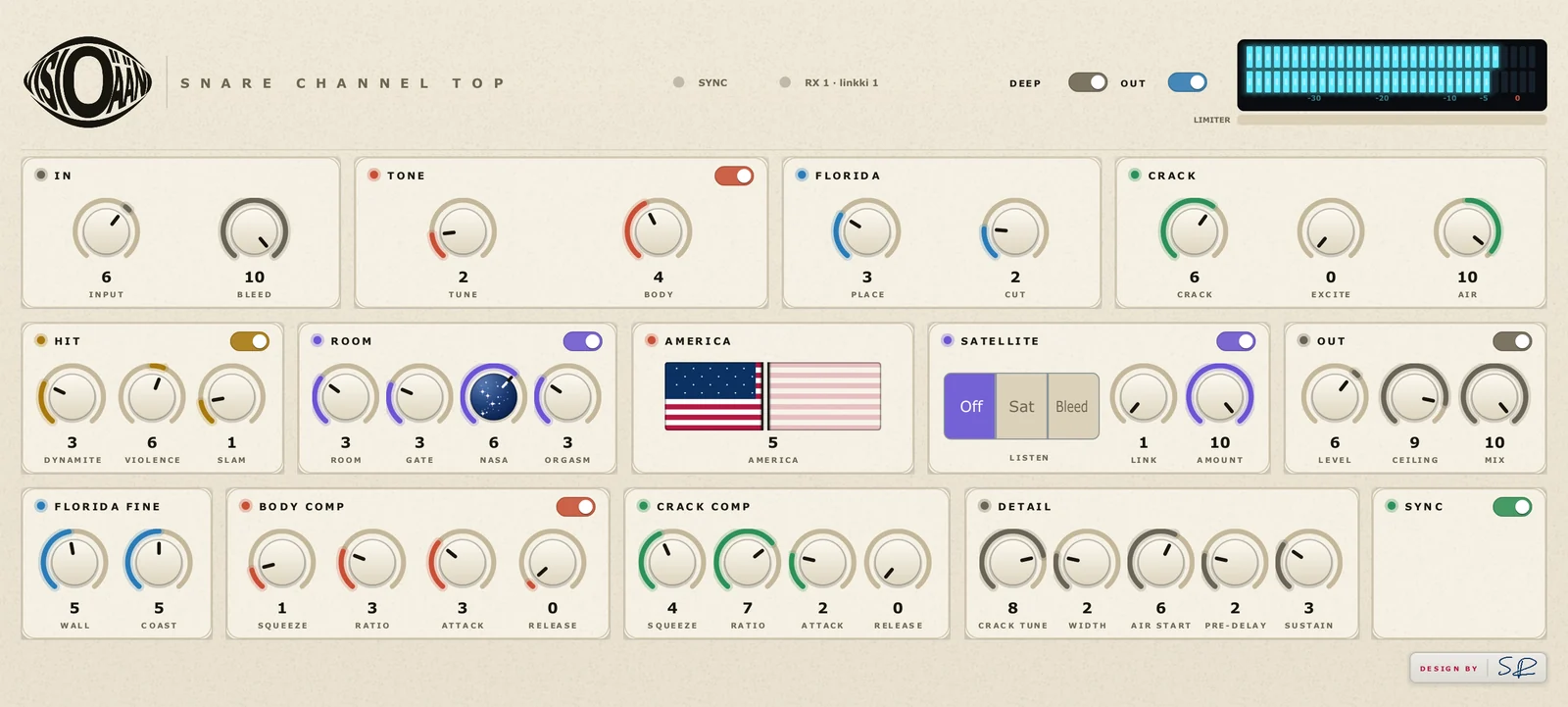
Florida removes the cardboard without dropping your level. Tune builds the body at the drum's own note, Crack and Air put the top on, and a chamber sits behind it.
Florida shaper · chamber Details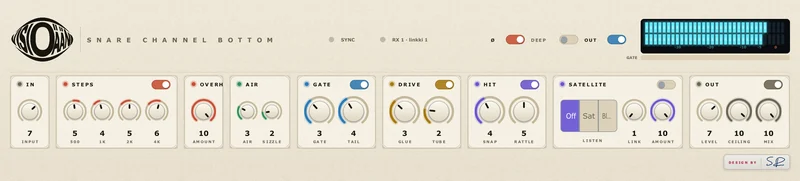
Already flipped, already cleaned under 500 Hz. Air and Sizzle bring the wires forward, Glue holds them there and a level-aware gate keeps the bleed out.
Wires forward · tube Details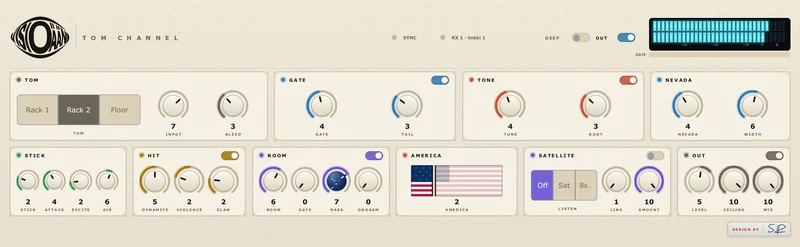
Pick Rack 1, Rack 2 or Floor and the tuning, the trough and the stick all move with it. Nevada takes out the mud above the note and leaves the note alone.
Rack · Rack · Floor Details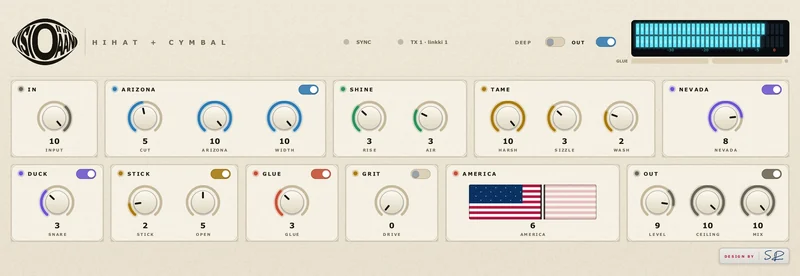
Shimmer without the shards. Nevada pulls down the narrow resonances that make a cheaper cymbal shrill, and Satellite lets the other mics remove the hi-hat.
Nevada · Satellite Details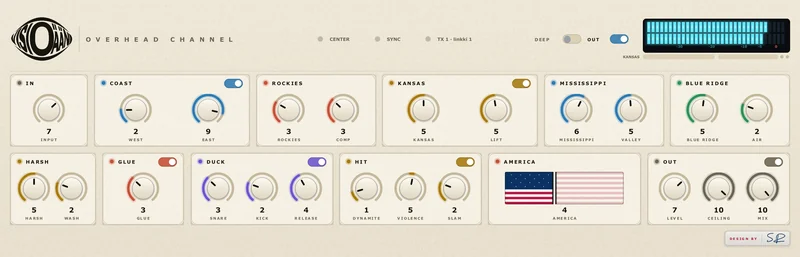
The whole kit as one picture with the cymbals tamed. A west-to-east EQ map, Kansas compression in the middle and a Duck that hears the snare and kick.
Coast to coast Details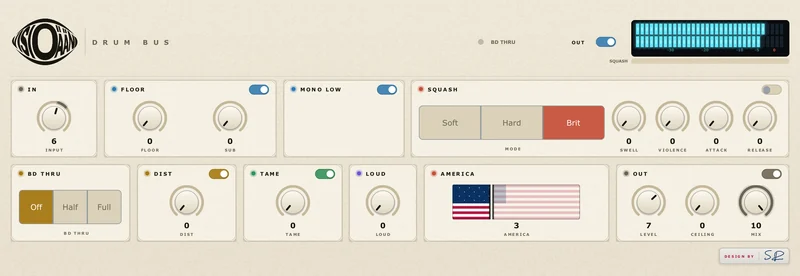
Glue that leaves the sub alone. Floor at 30 Hz, Soft, Hard or Brit squash, Tame for the 4 kHz pile-up, Loud for level without the squash, and Mono Low.
No-pump glue · Loud DetailsThey find each other inside your DAW. No sidechain cables and no setup.
Satellite
Hihat + Cymbal sends. Snare, Snare Bottom, Kick and Tom receive and take the hi-hat out of their own mic. The drum itself is never touched.
Needs a close hi-hat mic. Listen lets you hear exactly what is removed.
Sync
The snare is the reference. Kick, bottom snare, toms, overheads and cymbals measure their delay against it and fall into line, polarity included where it is needed.
The latency never changes and the result is saved with the project.
Level match
Every cut, compressor and transient move is level-matched while it runs, so you judge tone instead of loudness.
The front panel holds only what the drum needs. DEEP opens the rest.
Default settings, no adjustment, on real tracks.
| Plugin · what was measured | Raw | Defaults |
|---|---|---|
| Snare · cardboard 250–600 Hz (worst of four snares) | 60.8 % | 8.0 % |
| Snare · crack 1.5–4 kHz (same track) | 1.7 % | 38.1 % |
| Snare Bottom · wires 4–8 kHz | 25.3 % | 61.9 % |
| Hihat + Cymbal · worst resonance above the curve (real crash) | 13.4 dB | 8.1 dB |
| Drum Bus · 4 kHz pile-up (recent American records: −17 … −18) | −12.1 dB | −14.7 dB |
| Overheads in phase with the snare · summed transient peak | −4.4 dBFS | −2.1 dBFS |
Every build passes the same 21-test run before it ships: silence in gives silence out, every control at its extremes without a glitch, the ceiling holds on 60 random settings, the same result at any buffer size, stable from 44.1 to 192 kHz, and Mix at 0 % is your untouched track.
How the problems these plugins solve actually behave, with the numbers.
Where the boxy, cardboard sound in a snare close mic sits, how to cut it without losing the drum's body, and why the level must be matched.
GuideWhy EQ and gates do not remove hi-hat bleed from a snare mic, how an adaptive canceller does it with a close hi-hat mic as the reference, and when it cannot work.
GuideAlign kick, bottom snare, toms and overheads to the snare top with measured delays and polarity, and avoid the pitfalls of manual nudging.
One email when the plugins go on sale, with the launch price and gain-matched before-and-after examples. Nothing else, and you can leave the list at any time.