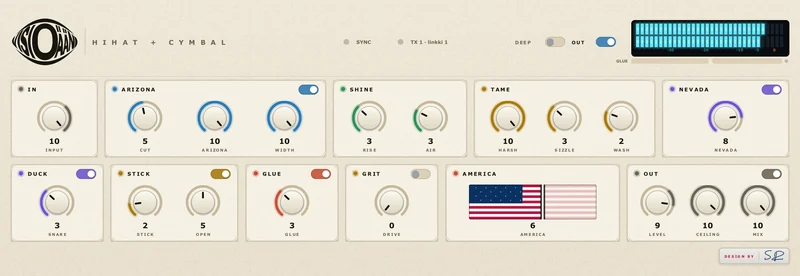
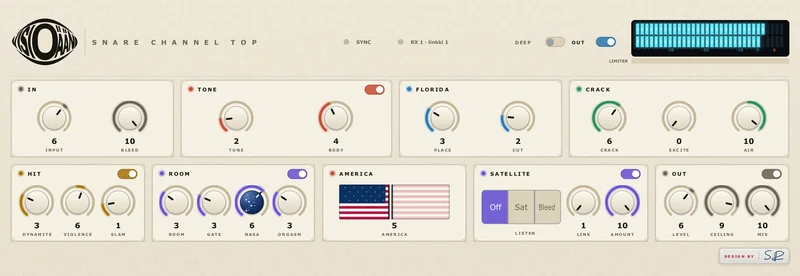
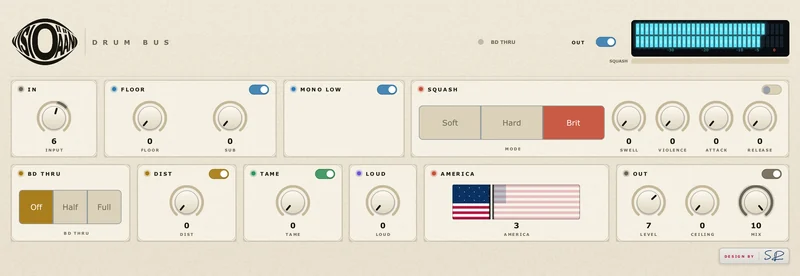
The shop is open. All seven drum plugins $99 regular price $177 until 30 November. Free 14-day trial, no card. Try free for 14 days
VisioääniDrum plugins
  1. Home
  2. Plugins
  3. Overhead/Room

Overhead and room channel · VST3 · AU

Visioääni Overhead/RoomCoast to coast. Then the room.

The overhead channel for the big American rock sound. The overheads stay a picture of the whole kit, with the body kept in and the harsh cymbal edges taken down only when they appear.

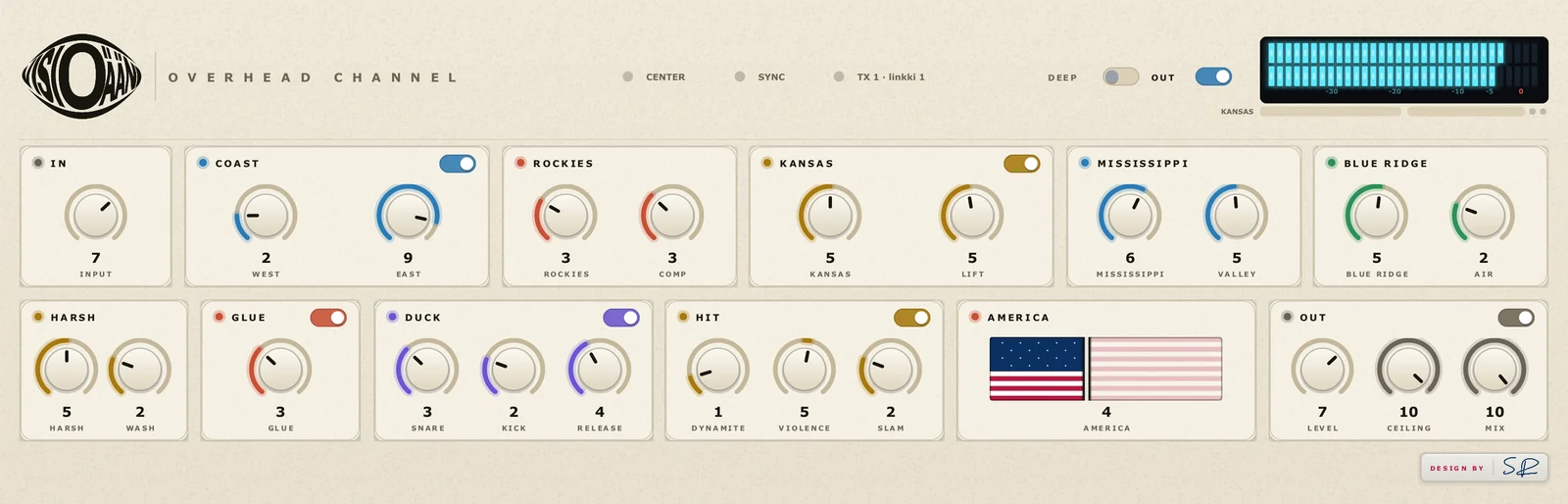
The default EQ is a map from west to east: a 35 Hz West Coast high-pass, the Rockies, Kansas, the Mississippi, the Blue Ridge and a 17 kHz East Coast low-pass.

Flip the switch to Room and the same knobs become the room channel. Slam is the smash: the room stays up between the hits, and the hits stay where they were.

Visioääni Overhead/Room plugin window with default settings
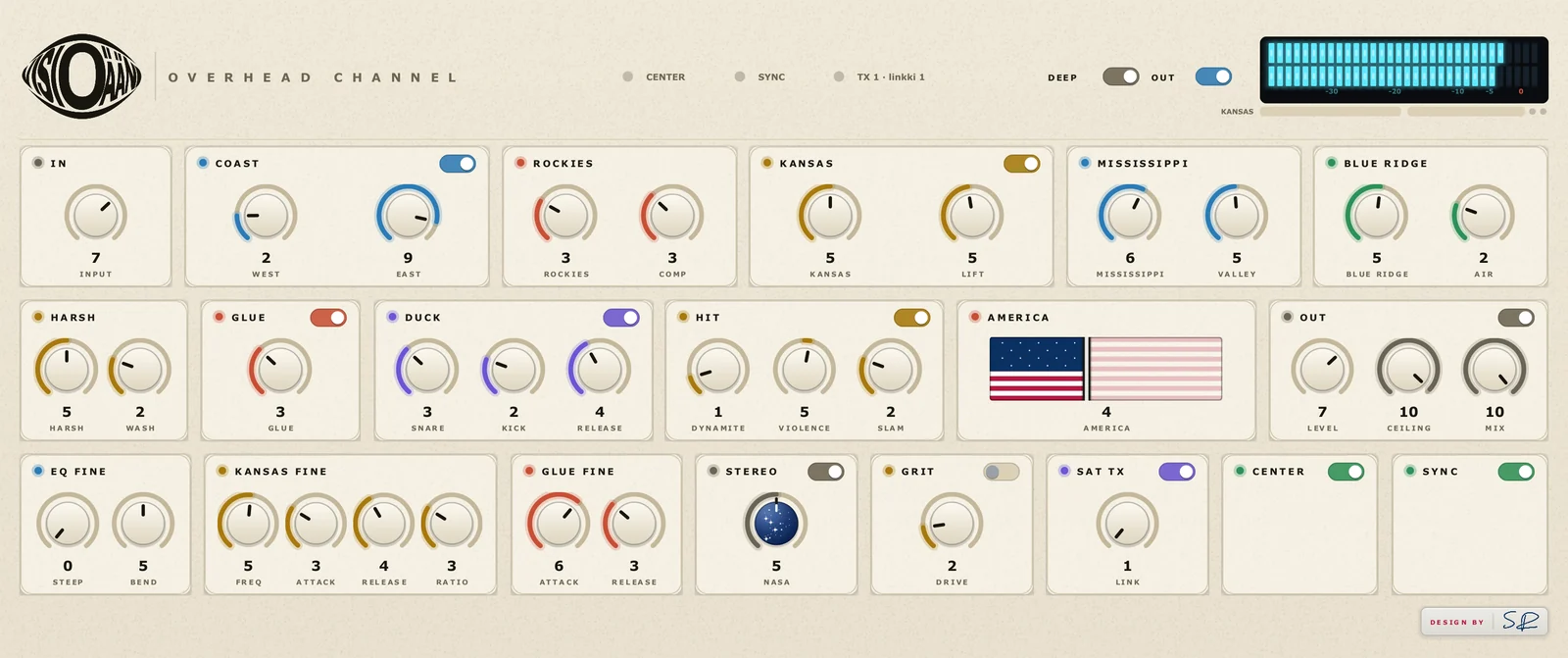
Visioääni Overhead/Room 1.4.9 with the default settings. The panel reads OVERHEAD CHANNEL, or ROOM CHANNEL in the Room position.
Visioääni Overhead/Room plugin window in DEEP view with the fine controls
DEEP view, the fine controls: EQ Fine, Kansas Fine, Glue Fine, Stereo, Grit, Sat TX, Center, Sync.

What it does

Room

The room channel, one switch

A switch at the start of the panel: Overhead or Room. Room retunes the same knobs for room mics the American way, and pressing it writes the room's starting settings. Slam is the smash. Measured on a tester's room mic, 144 hits: dry, the level between hits sits 8.3 dB under the hits. At Slam 70 % (7 on the knob) the dip is gone, the hits themselves move less than 0.1 dB and the cymbal tail does not get shorter. The low end rises with the mids, so the kick does not pump the room.

Kansas

Mid compression from the first second

Kansas sits at 600 Hz. At rest it lifts the area; on every snare and tom hit it pushes it down. The kit body breathes and the cymbals do not move.

Mississippi

Clang out, level kept

A −8.3 dB channel at 2.4 kHz and a −2.9 dB valley at 1.3 kHz, level-matched so the cut never costs volume. Bend moves both by up to an octave. If the ride bell sits in the cut, Bend moves the cut off it.

Harsh

Dynamic, not a fixed cut

Harsh at 3.5 kHz and Wash at 8 kHz cut only while the cymbals get harsh or washy, so the air stays on the quiet passages.

Sync

Overheads in phase with the snare

On a real session the overheads were 3.1 ms late (about 1.1 m) and reversed. Sync moved and flipped them, and the summed transient peak rose from −4.4 to −2.1 dBFS.

Controls

The front panel, left to right and top to bottom. Every control reads 0–10. DEEP adds: EQ Fine, Kansas Fine, Glue Fine, Stereo, Grit, Sat TX, Center, Sync.

ModuleControlsWhat it does
ModeOverhead · RoomWhich mic this is. Overhead keeps the kit as a picture and sounds as it always has. Room turns the same controls into the room channel and writes the room's starting settings.
InInputInput trim.
CoastWest Coast · East Coast35 Hz high-pass and 17 kHz low-pass. Steep makes the high-pass 24 dB/oct for cymbals-only overheads.
RockiesRockies · CompWide 200 Hz bump that dips on hits.
KansasKansas · Lift600 Hz compression amount and resting level.
MississippiMississippi · ValleyLevel-matched cuts at 2.4 kHz and 1.3 kHz.
Blue RidgeBlue Ridge · AirStick at 5.3 kHz and an air shelf from 10 kHz.
HarshHarsh · WashDynamic cuts at 3.5 kHz and 8 kHz.
GlueGlueSlow-attack kit compression.
DuckDuckDips the cymbals on snare and kick hits, no sidechain routing.
HitDynamite · Violence · SlamAttack, tail length and parallel squash for the whole kit, level-matched. Room: Slam is the smash.
AmericaAmericaThe last tonal stage.
OutLevel · Ceiling · MixLook-ahead limiter and dry/wet.

Measured

The default EQ, read from a reference curve and mapped west to east.

ModuleWhatDefault
West CoastHigh-pass 12 dB/oct35 Hz
RockiesWide bump at 200 Hz, dips on hits+1.7 dB / 4 dB
Kansas600 Hz compression and lift6 / +2.8 dB
MississippiChannel at 2.4 kHz, valley at 1.3 kHz−8.3 / −2.9 dB
Blue RidgeStick at 5.3 kHz, air shelf at 10 kHz+4.2 / +2.5 dB
East CoastLow-pass 24 dB/oct17 kHz

Specifications

Formats
VST3 (Windows, macOS) · AU (macOS)
Systems
Windows 10 or 11, 64-bit · macOS 11 or later, Apple silicon and Intel
Sample rates
44.1 to 192 kHz
Latency
1840 samples (38.3 ms at 48 kHz), fixed, reported to the host
CPU
3.4 % of one core per instance at 48 kHz
Version
1.4.9

How Overhead/Room was made

Visioääni started about two years ago from a habit we wanted to break. Every drum mix ended up with a stack of different plugins on every mic: one for the gate, one for the EQ, one for the transients, one for the compression, and something else again for the bleed and the phase. It worked, but it was slow, and every session started from the same pile.

So we asked whether one set could do all of it, and do it quickly. The answer became seven channels, one for each drum mic, that find each other inside the DAW. The defaults were measured on real sessions before they were set, and the controls were cut down to the few a drum actually needs, each from 0 to 10.

Overhead/Room joined the set in version 1.2 on 29 September 2026 and went through the beta with testers in nine countries. It got 4 changes in the beta releases from 1.2 (29 September 2026) to 1.4.9 (12 November 2026), 3 of them from testers' reports. The list comes from the release notes, newest first. The beta continues.

  • 1.4.9, 12 November 2026. All seven plugins: a new Super Easy Mode, suggested by a tester who found the panels too many knobs for a beginner. The SUPER EASY switch sits next to DEEP, and the three views are now Super Easy Mode, Normal and Deep. Super Easy Mode opens a compact panel with a neon screen and five to seven macro knobs, each from 0 to 10, with Level and America on the bottom row; on most knobs 5 is the plugin's default sound and a double-click takes a knob back to it. The macros only move the plugin's own controls, so Super Easy Mode itself does not change the sound, Normal and Deep show exactly what a macro did, and automation and old projects work as before. A new plugin opens in Super Easy Mode; a project saved with an earlier version opens in the Normal view. On the neon screen the logo glows with the hits, and while you turn a state cutter such as Florida or Texas the screen draws the state as the bite it takes out of the sound. From a tester's report.
  • 1.4.8, 14 October 2026. The Mississippi and Bend hints now say that a ride bell can sit in the Mississippi cut and that Bend moves the cut off it. Measured on a tester's track: Bend −4 lifted the bell 4 to 6 dB. Text only, the sound is unchanged. From a tester's report.
  • 1.4.8, 14 October 2026. The Overhead plugin has a switch at the start of its top row, Overhead | Room. Overhead is the default and bit-identical to 1.4.7, and projects saved with earlier versions open as Overhead. Room retunes the same knobs for room mics and writes the room's starting settings when you press it; Slam is the smash. Measured on a tester's room mic, 144 hits: dry, the level between hits sits 8.3 dB under the hits; at Slam 70 % (7 on the knob) the dip is gone, the hits themselves move less than 0.1 dB, the low end rises with the mids (the kick does not pump the room) and the cymbal tail does not get shorter. Latency is the same in both positions, 1840 samples. From a tester's report.
  • 1.2, 29 September 2026. New Overhead plugin with the coast-to-coast EQ map, Kansas compression and Duck.

Changes shared by all seven plugins, such as the resizable window, the tooltips and bypass that keeps the timing, are in the release notes.
Questions about Overhead/Room

I want cymbals only in my overheads. Can I do that?

Yes. Raise West Coast and turn on Steep in DEEP for a 24 dB/oct high-pass at 400–500 Hz, the modern metal approach. The default keeps the whole kit in the picture.

Do I still need the Hihat + Cymbal plugin?

Use Overhead on the overhead pair and Hihat + Cymbal on hi-hat and cymbal close mics. Hihat + Cymbal is also the Satellite sender.

What changes when I pick Room?

The same controls are retuned for a room mic and the panel reads ROOM CHANNEL. Pressing Room writes the room's starting settings into the knobs; Slam at 70 % (7 on the knob) is the smash that keeps the room up between the hits. Latency is the same in both positions, and you can switch during playback without a click, so compare the two on your track.

Does Room change my Overhead settings?

The knobs, yes. The Room button writes the room's starting settings into the knobs and the Overhead button puts them back to the factory defaults, so switching writes over your own tweaks: keep a preset if you need them. The Overhead sound is the same as in 1.4.7, and projects saved with earlier versions open as Overhead.

How was Overhead/Room developed?

Visioääni is a team of three in Tampere, Finland. The project started about two years ago, from mixing real drums with a different plugin for every job on every mic and asking whether one set could do it all, quickly. Overhead/Room got 4 changes in the beta releases 1.1 to 1.4.9, 3 of them from testers' reports. They are listed on this page under How it was made.

Works with

Hear it before the pre-sale ends.

One email before the pre-sale ends on 30 November, with gain-matched before-and-after examples. Nothing else, and you can leave the list at any time.